/* Sitemap plugin By MyBloggerLab */ #bp_toc { color: #666; margin: 0 auto; padding: 0; border: 1px solid #d2d2d2; float: left; width: 100%; } span.toc-note { display: none; } #bp_toc tr:nth-child(2n) { background: #f5f5f5; } td.toc-entry-col1 a { font-weight: bold; font-size: 14px; } .toc-header-col1, .toc-header-col2, .toc-header-col3 { background:#9E9E9E; } .toc-header-col1 { padding: 10px; width: 250px; } .toc-header-col2 { padding: 10px; width: 75px; } .toc-header-col3 { padding: 10px; width: 125px; } .toc-header-col1 a:link, .toc-header-col1 a:visited, .toc-header-col2 a:link, .toc-header-col2 a:visited, .toc-header-col3 a:link, .toc-header-col3 a:visited { font-size: 13px; text-decoration: none; color: #fff; font-weight: 700; letter-spacing: 0.5px; } .toc-header-col1 a:hover, .toc-header-col2 a:hover, .toc-header-col3 a:hover { text-decoration: none; } .toc-entry-col1, .toc-entry-col2, .toc-entry-col3 { padding: 5px; padding-left: 5px; font-size: 12px; } .toc-entry-col1 a, .toc-entry-col2 a, .toc-entry-col3 a { color: #666; font-size: 13px; text-decoration: none } .toc-entry-col1 a:hover, .toc-entry-col2 a:hover, .toc-entry-col3 a:hover { text-decoration:underline; } #bp_toc table { width: 100%; margin: 0 auto; counter-reset: rowNumber; } .toc-entry-col1 { counter-increment: rowNumber; } #bp_toc table tr td.toc-entry-col1:first-child::before { content: counter(rowNumber); min-width: 1em; min-height: 3em; float: left; border-right: 1px solid #fff; text-align: center; padding: 0px 11px 1px 6px; margin-right: 15px; } td.toc-entry-col2 { text-align: center; }

Friday, 6 June 2014

Gastrointestinal Issues in Runners and Strategies to Overcome Them

Bill Rogers, a famous American runner that won four times the Boston and NYC marathon's between 1975-1980 and a 2000 USA Track & Field Hall of Famer stated, "more marathons are won or lost in the portable toilets than at the dinner table". Obviously, he was well aware of the gastrointestinal (GI) issues runners face.
GI issues have a variety of symptoms including: diarrhea, nausea, vomiting, bloating, belching, cramps heartburn and bloody stools. Symptoms are more common in women, younger athletes, elite athletes and people with a history of GI issues. It is estimated to occur in 30-90% of distance runners during and/or after exercise. Complaints of GI issues differ in severity and they may cause a decline in performance and recovery.


There are three main reasons for GI problems:

  • Physiological - When we exercise, depending on the intensity, blood supply to the gut may decrease by up to 80% in order to transfer more blood to the working muscles, skin and heart. This in turn may cause diarrhea, nausea, vomiting and stomach pain.
  • Mechanical -   Running is a high impact sport with continuous pounding. This pounding also influences the GI tract which in turn can cause GI symptoms. Therefore, runners have a tendency to have more problems than bikers. 
  • Nutritional - The meal timing before exercise as well as beverage and food choices may cause GI symptoms. A meal shortly before running, rich with fiber, fat and protein will cause GI symptoms because these nutrients have a slow emptying rate in the stomach. Drinking a concentrated carbohydrate beverage during or slightly before a race will cause GI symptoms. Moreover, dehydration intensifies GI symptoms. As discussed in the previous blog on alcohol and performance, drinking the night before a run several drinks can cause GI symptoms probably due to its diuretic effect. 
  • Note; Certain people may have a medical condition such as: celiac disease, lactose/fructose mal-absorption and irritable bowel syndrome to name a few, that makes them more susceptible to GI symptoms

Since this blog is a nutrition blog, lets talk about some nutrition strategies to prevent GI symptoms:

  • Hydration, hydration, hydration - before a run, make sure you are hydrated. Focus on hydrating well throughout the day. 
  • Avoid beverages during or slightly before a run rich with fructose such as juice. Prefer water or if running long distance, a sports beverage with 6-8% carbohydrates such as Gatorade or Powerade.
  • Avoid high fiber foods 1-2 hours pre-exercise as well as the day before a big race. 
  • Avoid high fat and high protein foods 1-2 hours pre-exercise
  • "Train the gut" - the gut is very adaptable, therefore, train your gut by eating during your training as well as before (if activity is lower than 60-90 minutes there is no need to eat anything during and water should suffice). Experiment with foods before a training session to check what works and what doesn't.
  • Avoid using non-selective, non steroidal anti-inflammatory drugs (NSAIDs) such as Aspirin and Ibuprofen as they tend to increase GI symptoms.
  • Avoid lactose containing milk products if you think or know that you are lactose intolerant. 
  • Avoid or limit alcohol drinking before a morning run or a big race
It is very important that if you have severe GI symptoms such as bloody stools, you consult with a medical professional.
For specific guidance and assistance if you suffer from the symptoms noted above, consider consulting with a sports dietitian to help you with strategies to prevent any GI symptoms.



Friday, 30 May 2014

Whats all that grain about?!

Knowing the difference between whole grain, multigrain, and refined grains is an important step in making sure your diet consists of healthy complex carbohydrates to give you long-lasting energy.


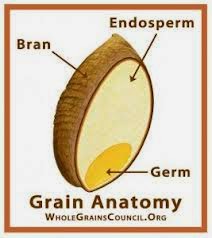
Whole grains are healthier for you than processed and refined grains because they are a complex carbohydrates rather than a simple sugar, helping you to control blood sugar, reduce cholesterol and maintain a healthy weight. Consuming whole grains may help reduce the risk of heart disease and certain cancers, as well as help with weight managementWhole grains contain all parts of the grain kernel – the bran, germ and endosperm, which provide B vitamins, folate, iron, fiber and other minerals. B vitamins play a key role in metabolism and energy release, folate helps form red blood cells, and iron is used to carry oxygen in the blood. Whole grains also contain magnesium and selenium. Magnesium helps bone development as well as muscle contraction and selenium helps with oxidative stress and inflammation.


Multigrain products contain a mix of grains, such as wheat, oats, barley or cornmeal, although none of them may necessarily be whole grains. The grains may have been processed or refined, therefore reducing the nutritional value. The refining process removes the bran and germ from the grain, making it less rich in helpful vitamins and minerals. Products may be “enriched,” but it doesn't make up for the natural parts of the grain.
Examples of healthy whole grains include: whole –wheat flour or pasta, oatmeal, rolled oats, whole cornmeal, brown or wild rice, quinoa, bulgur, buckwheat and even popcorn. Look for products that list the first ingredients as “whole” vs "enriched". 
USDA states on their website that "foods that are labeled with the words "multi-grain", "stone-ground", "100% wheat", "cracked wheat", "seven-grain or "bran" are usually not whole grain products".

To help get you started with some whole grain goodness here is a recipe for cold quinoa salad

COLD QUINOA SALAD
Servings: 4

Ingredients: 
1 cup cooked quinoa
1/2 a yellow or red pepper diced
1 cup of cherry tomatoes cut in half
1/2 cup of dried tomatoes sliced
1 cup diced cucumber
1/2 cup diced black olives
1/2 cup fat free feta cheese
1/4 cup of fresh basil 
2 Tbsp olive oil
4 Tbsp of lemon juice
Salt and pepper per preference 
1/4 cup Diced scallions

Directions
Place the first 8 ingredients in a large bowel and mix
Add oil, lemon, salt and pepper to the mix
Serve and enjoy with a garnish of scallions

For more recipes go to http://www.choosemyplate.gov/healthy-eating-tips/sample-menus-recipes.html

Bon Apetit! 


Contributed to this blog - Intern Brooke Kinney


Friday, 23 May 2014

Giving Yourself That Edge…Safely (Guest blog)


It’s no secret that whole foods and drinks are the safest and smartest route to go when fueling for your sport.  The evidence against steroids and other performance enhancing drugs are there and will only continue to mount, yet there will always be the individual that chooses to take that route.  The great thing about food is not only will it protect you from failing a drug test and costing you your scholarship and athletic career, but it also has so many other properties that can enhance your performance and recovery other than just providing the fuel you need to perform. 

More and more research is coming out on beneficial foods that can help an athlete perform better but also recover stronger.  The following is a list of 4 foods, some common, some maybe not, that can help you perform at your peak as well as help you recover. 

Beet root- Most of us consume the sugar from beets quite often (and too much).  It is how we get a majority of our table sugar.  I introduce to you a vegetable that will give you a boost.  Beets should be an athlete’s best friend.  It is a safe and alternative way to expensive and potentially adulterated pre workout supplements.  Beetroot juice, such as Beet Elite, can be taken to improve an athlete’s performance and give them that extra jolt of energy to perform their workout or before competition day.  It is a great source of nitric oxide, which expands your blood vessels to allow more blood carrying oxygen and vital nutrients to your muscles for greater exercise potential.  As opposed to taking a pre workout substance such as NO Explode, you don’t have to deal with a proprietary blend (what does that even mean?) or potential adverse health effects.  Instead, you get a whole food (or juice) that also delivers folate, potassium, vitamin C, fiber and antioxidants.

Tart Cherry Juice- Another juice that can be beneficial to the athlete.  Many times after a workout you will get sore and it may cause you to skip a workout or to not be as effective at your next workout.  Drinking tart cherry juice (maybe add water to help dilute the tartness) has been shown to decrease the pain during exercise and after.  Cherry juice also provides antioxidants that can help decrease inflammation post exercise, which in turn helps us recover more efficiently. 

Chocolate Milk- A great recovery drink that is cheap and tasty. It contains whey and casein which are important for muscle building and therefore, is a great post workout option. Moreover, it contains carbohydrates that help us replenish our glycogen stores (which provide us energy) lost during exercise. Chocolate milk also contains electrolytes that help us replenish what we lost in sweat as well as vitamins and minerals such as Vitamin D and Calcium that assist with bone formation and strength. 

While it is convenient to take supplements to gain the competitive edge, the risk of having adverse health effects and not truly knowing what is in them can cost you your health and your career.  We have everything we need to perform at our best in the foods we consume.  The best thing you can do for your performance is consume a quality diet of whole foods and stay properly hydrated.  Cheers to eating clean and working hard!


 Guest writer: Tommy Jensen is a Registered Dietitian and a personal trainer certified through the American College of Sports Medicine.  He was a collegiate athlete and is working to be an advocate for athletes and adolescents to avoid performance-enhancing supplements.


Friday, 16 May 2014

Hydration, Hydration, Hydration


Summer is just around the corner and with it comes warm weather and training more outdoors. More time outdoors and training in the heat may cause dehydration and/or heat related issues.  Therefore, this summer, lets focus on hydrating for performance and preventing injuries related to dehydration.

To stay well hydrated we should rely mainly on fluids but we can also rely on foods.  Eating things like fruit, vegetables, soups, smoothies and yogurt can help replenish some of those fluids. Especially summer fruits and vegetables like: watermelon, peaches, nectarines, melons, grapes, cucumbers, sweet bell peppers, tomatoes, summer squash and berries. These fruits and vegetables not only have a good amount of fluids but they contain plenty of antioxidants to help us recover from our activity, stay healthy and maintain a strong immune system.

The most efficient way to stay hydrated is drinking water or a sports beverage. How much and what you need to drink depends on genetics, the length and intensity of the activity as well as if you are a heavy and/or salty sweater. Make sure you arrive to your training session/game well hydrated or else you may not even last half of it. Activities that are 60-90 minutes ideally should be replenished with water. If your activity is more than 60-90 minutes you should hydrate with a sports beverage. Try to reach for your beverage every 15-20 minutes and drink about 5-12 oz. The ideal sports beverage should have 110-170 mg of sodium, 20-50 mg of potassium and 12-24 grams (6-8%) of carbohydrates per 8 oz.

How much fluid should I drink after activity? Weigh yourself before and after activity (ideally with minimal amount of cloths), for each pound you lose hydrate with 16-24 oz. If you are a salty sweater (characterized by the following: your sweat stings in your eyes or burns when reaches an open cut, you tend to leave white lines on things like hats and shirts, your skin feels gritty after a run and it actually tastes salty) make sure you also add simple salty foods to the equation not just a sports beverage (pretzels, crackers, etc.). You can also have a sweat test done (a test that can tell you how much sodium and fluids you lose in an hour of exercise) in order to provide you with an exact regimen of how much you need to drink as well as how much sodium you need.
    
To make sure you are hydrated, it’s important to know what the signs and symptoms of dehydration are. Signs and symptoms of dehydration include:  elevated heart rate, headache, reduced sweating, muscle cramps, dark urine, small urine volume, chills, clammy skin, nausea, vomiting, may cause heat related illness – e.g heat exhaustion, heat stroke (For more info on heat exhaustion and heat stroke visit http://www.cdc.gov/nceh/extremeheat/warning.html).
A urine scale is commonly used to check level of hydration. The rule we try to stick to is that it needs to be more like lemonade versus apple juice   


Whether its for fun or practice, make sure you hydrate well this summer!
Here are some ways to help you stay hydrated:

  1. Drink throughout the day
  2. Carry a full water bottle with you at all times
  3. Drink 1-2 cups of water before each meal
  4. Drink 2-3 cups of fluids before each practice/activity
  5. Drink 1-2 cups of water before you go to bed
  6. Drink every 15-20 minutes during practice/exercise
  7. Avoid hydrating with energy drinks or caffeinated beverages
  8. Depending on activity level, consider eating salty snacks as they will cause you to drink
 Drink up!