/* Sitemap plugin By MyBloggerLab */ #bp_toc { color: #666; margin: 0 auto; padding: 0; border: 1px solid #d2d2d2; float: left; width: 100%; } span.toc-note { display: none; } #bp_toc tr:nth-child(2n) { background: #f5f5f5; } td.toc-entry-col1 a { font-weight: bold; font-size: 14px; } .toc-header-col1, .toc-header-col2, .toc-header-col3 { background:#9E9E9E; } .toc-header-col1 { padding: 10px; width: 250px; } .toc-header-col2 { padding: 10px; width: 75px; } .toc-header-col3 { padding: 10px; width: 125px; } .toc-header-col1 a:link, .toc-header-col1 a:visited, .toc-header-col2 a:link, .toc-header-col2 a:visited, .toc-header-col3 a:link, .toc-header-col3 a:visited { font-size: 13px; text-decoration: none; color: #fff; font-weight: 700; letter-spacing: 0.5px; } .toc-header-col1 a:hover, .toc-header-col2 a:hover, .toc-header-col3 a:hover { text-decoration: none; } .toc-entry-col1, .toc-entry-col2, .toc-entry-col3 { padding: 5px; padding-left: 5px; font-size: 12px; } .toc-entry-col1 a, .toc-entry-col2 a, .toc-entry-col3 a { color: #666; font-size: 13px; text-decoration: none } .toc-entry-col1 a:hover, .toc-entry-col2 a:hover, .toc-entry-col3 a:hover { text-decoration:underline; } #bp_toc table { width: 100%; margin: 0 auto; counter-reset: rowNumber; } .toc-entry-col1 { counter-increment: rowNumber; } #bp_toc table tr td.toc-entry-col1:first-child::before { content: counter(rowNumber); min-width: 1em; min-height: 3em; float: left; border-right: 1px solid #fff; text-align: center; padding: 0px 11px 1px 6px; margin-right: 15px; } td.toc-entry-col2 { text-align: center; }
Showing posts with label Hydration. Show all posts

Wednesday, 29 June 2016

Staying Hydrated This Summer in 5 Easy Steps


Summer time is a great time to be active outside while it's sunny and warm...but it's important to stay hydrated!

It's time to move activities outdoors. No matter what the activity is, if athletes are spending time outside being active this summer, they're probably going to get a lot sweatier, making it important that they pay close attention to hydration.

When our bodies get dehydrated, we lose the ability to regulate body temperature, making us susceptible to heat illness. Dehydration also has a negative impact on exercise performance, so starting a workout, practice or game in a dehydrated state means athletes aren't getting the most out of that session and are at a greater risk for heat illness.

If athletes are going to be active/exercising outside, they can follow the steps below to stay hydrated all day long and avoid performance deficits this summer.

5 Easy Steps to Stay Hydrated

1. Find out how much water you should be drinking in a day when you're not active. 

One basic equation for finding out how much fluid you should be drinking in a day is to divide your body weight in pounds by 2, and drink that much fluid in ounces per day. 

For example, a 150 lb. athlete would need 150/2 = 75 ounces of water per day, or 9.5 cups (8-ounce cups) per day. 

Fluids includes drinks other than water (including milk, juice, broth, etc.), but athletes should really be focusing on drinking at LEAST the recommended amount of fluid in pure water per day if they're not active, plus EXTRA for exercise. 

2. Monitor your hydration status.

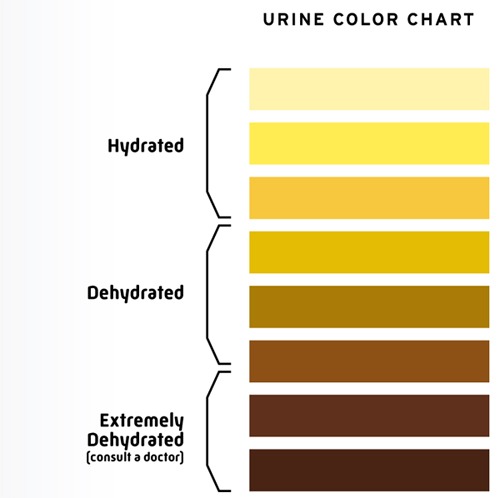
At the Sanford Sports Science Institute, we encourage athletes to monitor the color of their urine to check on their hydration status. Lighter urine usually means an athlete is properly hydrated, so before going into a practice or game, athletes should make sure they are properly hydrated, especially if they're going to be outside on a hot day. 

3. Add extra fluid for the sweat lost during exercise. 

Athletes who follow the above recommendations will likely get enough water during the day on an inactive day, and go into their workout or competition adequately hydrated, but this doesn't mean they don't have to replace the fluid lost in sweat during their workout. When we sweat, we lose water and electrolytes, making it important to drink plenty of fluids before, during and after exercise. 

One tip athletes can follow is to bring their water bottle to every workout and competition and take several large drinks of water at every break they get, or every 10-15 minutes. 

Athletes can also monitor how much weight they lose during a workout or competition by weighing themselves before and after - any more than 2% weight loss indicated inadequate fluid consumption.

After the workout, replace the water lost in sweat by drinking 16-20 ounces of water for every 1 lb. of weight lost. By neglecting to replace the fluid lost during exercise, athletes may go into their next session in a dehydrated state. 

3. Start drinking plenty of water early in the day. 

A great tip for athletes to follow is to drink water right when they wake up, especially if they have a workout later in the day. 

Some recommendations say to drink 2-5 cups of water, several hours before a workout or competition, especially if it is going to be outdoors in the heat.

For many busy athletes, starting the day off with several glasses of water becomes a healthy habit to promote hydration and start the day off on the right food. 

4. Make note of the signs of dehydration and take action early. 

Thirst isn't always the best indicator of when athletes should drink water - sometimes you don't get thirsty until you're dehydrated. Other signs of dehydration include headache, dry skin, dry/sticky mouth, constipation and feeling tired or less energetic than usual. 

If you're experiencing any of those symptoms, drink up! Carry your water bottle with you and refill it several times a day, especially on days where you'll be spending time outdoors in the heat. Some very intense or prolonged (>90 minute) workouts in the heat may require a sports drink or some sort of electrolyte replacement beverage. 

5. Load up on fruits and vegetables!

Summer is the perfect time to load up on fresh fruits and vegetables, which are not only rich in nutrients, but also have a high water content. The foods you eat during the way will contribute to your hydration status, but during the summer, seasonal fruits like watermelon, strawberries, pineapple, zucchini, etc. have a high water content, making them extra hydrating. 

Knowing how much you need to drink throughout the day, monitoring your hydration status, drinking plenty of water early in the day, knowing the signs of dehydration and loading up on water-rich fruits and vegetables are 5 easy steps you can take to stay hydrated, feel good and perform well all summer long!

Sweat testing at the Sanford Sports Science Institute
Find out more by calling 605-312-7878!
Athletes of all ages and from every sport who have access to the Sanford Fieldhouse can get their sweat fluid and electrolyte loss evaluated to receive individual-specific hydration and nutrition recommendations. These recommendations help athletes prepare for, manage, and recover from sweat fluid and electrolyte losses incurred during training or competition. Call today at 605-312-7878 to find out more on how this test would benefit you or your athlete. 


Monday, 5 October 2015

5 Tips to Making Hydration a Habit

Have you ever heard the rule, "You should be drinking eight 8-oz glasses of water a day?" 


I certainly have...and while this is a good rule of thumb, hydration guidelines are highly individual. This makes it difficult to give people, especially people of different body sizes and activity levels, a set amount of water to drink every day. 

Probably not drinking enough water for her sweaty run in the desert!
Most people know they need to drink more water - a CDC survey discovered that many people were falling short of their hydration needs, some people not drinking ANY water at all.

 You've probably heard that your body is made mostly of water, right? Water is essential for our cells to function! It helps our body get rid of waste, regulate temperature, helps our joints move smoothly and keeps your brain working correctly. 


DID YOU KNOW...


...most people don't FEEL THIRSTY until they are slightly dehydrated. 

...being even slightly dehydrated can have an effect on your brain, heart, muscles and mood? Some people may experience headache symptoms, feel like they're in a bad mood, or feel like they can't focus.

Athletes are especially susceptible to dehydration because they lose sweat during their workouts and often aren't drinking enough to replenish this fluid loss. When we lose sweat, our blood volume goes down, reducing the amount of blood pumped with each heart beat, which can impair performance by reducing the amount of oxygen delivered to our muscles. The bottom line is that even 2-3% decrease in body weight can impair performance. This brings us back to the question - 

How do we know if we're getting enough water?


Athletes often don't know that their performance is affected by hydration because they're always performing in a slightly dehydrated state. Because hydration is different for everyone, many health professions will refer to this "urine color chart" from the U.S. Anti-Doping Agency - if your urine is light yellow, you're probably drinking enough water. 
U.S. Anti-Doping Agency


What about coffee, tea and soda? Alcohol?


Unless you're drinking 7+ cups of coffee, caffeinated tea or caffeinated soda per day, your daily cup of caffeine isn't going to cause you to be dehydrated. Alcohol, on the other hand, has strong diuretic properties, making you urinate more often, which can lead to rapid dehydration. This can be detrimental to active people and athletes, so making sure to limit alcohol to 1-2 drinks and at least 1 to 2 cups of water between each drink can help you stay hydrated.

These 5 tips can help athletes and active people get and stay hydrated, feel better, and achieve optimal performance. 


Grab your water bottle and fill it up


The Sanford Power website has a Nutrition and Hydration for Team Sport Athletes page dedicated to this very topic! 

Remember, everybody is different and you can be over hydrated. If you're running to the bathroom frequently or your urine is clear, you are likely drinking too much water, which can be just as harmful, if not more harmful to athletes than being dehydrated. 

If you are an endurance athlete or exercising/practicing for several hours a day, you may want to consider adding an electrolyte replacement or sports drink to your routine to help you replenish the electrolytes you're losing in sweat. Some people might even try making their own sports drinks to help them stay hydrated.

----------------------------------------------------------------------------

What are your best tips for staying hydrated? Ask the dietitian your hydration questions!


Friday, 27 February 2015

Did You Know?! We Do Many Things At SSSI

The Sanford Sports Science Institute offers many services besides just research and nutrition consults. We have state of the art facilities that allow us to work as a multi-disciplinary team to help athletes of all levels and ages as well as active individuals reach their goals. Whether its achieving a new PR or getting back to exercise post injury, we can assist.
Here are the services we provide, with a full description:


COMPREHENSIVE GAIT ANALYSIS
This is a comprehensive functional and biomechanical evaluation, as well as a rehabilitation and consultation service, for anyone who is looking to improve his/her running performance or with lower body musculoskeletal injuries. The analysis is performed on a Zebris® Force and Pressure Distribution platform that is integrated on a high-end h/p/cosmos® treadmill to analyze foot pressure, impact forces, roll-off and other gait parameters during walking and running. High-speed video cameras (100 fps) are used in conjunction with the Simi Aktisys automated motion-capture system to provide precise, quantitative biomechanical assessments for real-time biofeedback and off-line evaluation. Each athlete receives a personalized performance plan, including specific stretching and strengthening exercises, shoe/orthotic recommendations and corrective exercise techniques. Our expert professionals work one-on-one with the athlete to develop an individualized program to help achieve his/her specific performance goals.

CYCLING SPIN-SCAN ANALYSIS
Cyclists and triathletes can optimize their pedal stroke via a comprehensive computerized analysis on their bikes using the RacerMate® CompuTrainer™. The spin-scan evaluation calculates bi-lateral cycling efficiency of the leg musculature, as well as left vs. right power split and average torque angle. The individualized analysis also includes instantaneous, average and peak power output, revolutions per minute and speed.

SPORT NUTRITION ASSESSMENT AND CONSULT
Sport-specific nutrition interventions can help an athlete maximize power and endurance, as well as overall health and performance. The intervention begins with a 3-day dietary analysis, including an assessment of daily eating patterns, training dietary habits and nutrition tactics used during training and competition, including preparation and recovery. Through a one-on-one consultation with our sports dietitian, individualized strategies to maximize training and performance are developed. The dietitian also helps the athlete accommodate any specific allergies or chronic health conditions he/she may have. The goal is to help each athlete effectively fuel his/her body for optimal performance and health.

RESTING ENERGY EXPENDITURE (REE) AND BODY COMPOSITION EVALUATIONS
Determining an athlete’s REE, or roughly the minimum number of calories the body needs each day to function properly at rest, is extremely important when trying to personalize one’s nutrition and fitness strategies. Body composition (relative percentage of body fat and lean body mass) and REE are closely linked to one another and provide a foundation for establishing an athlete’s nutrition and fitness goals. Body fat percentage is estimated from multiple skin fold measurements and REE is determined from measuring oxygen and carbon dioxide exchange while at rest.

SWEAT FLUID AND ELECTROLYTE LOSSES AND PHYSIOLOGICAL STRAIN IN THE HEAT
This is an individual evaluation of an athlete in a specific environment using a temperature, humidity, and exercise intensity that elicited performance or health problems (for example, premature fatigue, heat exhaustion or muscle cramps) or to simulate upcoming training or competition conditions. Sweat fluid and electrolyte (sodium, potassium and chloride) losses are determined and cardiovascular and thermal strain (heart rate, core body temperature and physiological strain index) are evaluated. Individual-specific hydration and dietary strategies are provided, so that each athlete can more optimally prepare for, manage and recover from sweat fluid and electrolyte losses incurred during training or competition.

HEAT TOLERANCE TESTING
This is an evaluation of an athlete’s current tolerance to exercising in the heat. Athletes should consider having this test performed if he/she has had a heat-related illness, especially exertional heat stroke, or a long period of no exposure to the heat. This test can also be used to evaluate an athlete’s thermal and cardiovascular responses while wearing a particular clothing or uniform configuration during physical activity.

ATHLETE FIELD EVALUATIONS
One or more athletes are evaluated during training, practice or competition for hydration status (pre- and post-session), fluid intake and sweat fluid and electrolyte (sodium, potassium and chloride) losses.
Individual-specific hydration and dietary strategies are provided to help each athlete more optimally prepare for, manage and recover from fluid and electrolyte losses incurred during training and competition. Thermal strain (core body temperature, heart rate and physiological strain index) can be monitored in selected individuals.

FITNESS TESTING (VO2MAX)
VO2max (maximal oxygen uptake) is the best measure of an athlete’s cardiorespiratory fitness. Also referred to as aerobic capacity, VO2max reflects the body’s ability to deliver and use oxygen to meet the energy demands of exercise. A high aerobic capacity is especially important in endurance-type activities (for example, distance running, cycling and swimming); however, it is also important to enhance recovery between brief intermittent bouts of high-intensity activity in other sports (such as soccer, tennis, basketball and football) during practice and competition. This is a progressive incremental exercise test using a treadmill or exercise bike, depending on the athlete’s primary sport or preference.

FITNESS TESTING (LACTATE THRESHOLD)
Lactate threshold (LT) reflects the exercise intensity at which the concentration of lactate in the blood increases sharply. LT is a very good predictor of sustained endurance capacity and performance and is also helpful in determining an athlete’s appropriate training intensity zones. A high LT is especially important in endurance-type activities (e.g. distance running, cycling and swimming). Tracking changes in LT can assist an athlete in assessing the effectiveness of his/her training over several months. This is a progressive, incremental workload exercise test using a treadmill or exercise bike, depending on the athlete’s primary sport or preference.

PRESENTATIONS AND WORKSHOPS
The Sanford Sports Science Institute can meet with coaches, support staff (e.g., athletic trainers and administrators) and teams to discuss sport-specific training and competition challenges and nutrition/hydration needs that can help athletes optimize training, performance and recovery. A particular emphasis is placed on the challenges and solutions to training and competing optimally in the heat, while reducing the risk for heat- and fluid/electrolyte-related problems (e.g., muscle cramps, pre-mature fatigue, exhaustion and hyponatremia).


On our website you can find all this information as well as videos explaining some of the tests more thoroughly. Moreover, we have great education materials you are welcome to print and/or share with your coaches, teams, children and friends. For more information and/or to book our services, feel free to call us at (605)-328-4750. 

Thursday, 1 January 2015

Fighting Inflammation, The Healthy Way

In sports nutrition we talk about inflammation a lot. In fact, even in the clinical setting, we talk about inflammation. We talk about it because it promotes negative outcomes. It's associated with cancer, diabetes, heart disease and other conditions as well as sports injury, becoming ill (e.g. flu) and lack of ability to recover optimally. Therefore, we put emphasis in our practice to educate athletes on how to fight inflammation. Its important to understand though, that inflammation is an important process for an athlete as it is naturally created due to activity. However, we want to fight it in a healthy manner. Research shows that fighting sports related inflammation with drugs such as Aleve, Ibuprofen or other anti-inflammatories, may prevent the natural healing process muscle and even increase inflammation.


Here are some things you can do to help fight inflammation the healthy way:
  • Sleep well! For a college athlete recommendations are about 8-10 hours per day. If you did not meet this quota at night, consider taking a nap in the middle of the day. Lack of sleep prevents healing and promotes inflammation. 
  • Avoid or limit alcohol. Alcohol promotes inflammation and also decreases deep sleep (as mentioned above, sleep is important).
  • Avoid or limit fried fatty foods (pizza, fried chicken, fries, etc.) and concentrated sweets (Pop Tarts, soda, cookies, cake, milkshake, candy, etc.) as they promote inflammation.
  • Hydrate. Mainly with water. Fluids are important to help deliver nutrients to different parts of the body, including nutrients to fight inflammation. Moreover, dehydration decreases your immune function, which could cause you to get ill (=inflammation).
  • Eating plenty of fruits and vegetables. Fruits and vegetables are rich with antioxidants and phytochemicals that help fight inflammation. When you get injured, the first thing most people do is put ice. Think of fruits and vegetables as your ice inside the body. Very powerful anti-inflammatory.
  • Omega 3's, the fat located mainly in fish (salmon, tuna, mackerel, etc.) as well as some nuts and seeds (flaxseeds, chia seeds, walnuts, etc.) are a great source of anti-inflammatories. It is recommended to have at least 8 oz of fish per week. In certain cases, a supplement could be considered (please consult with a medical professional before taking any supplement).
  • Vitamin D aka the sun vitamin has been shown to be quite the immune booster. Vitamin D can be found in fortified products such as orange juice, dairy, soy foods as well as fish. Supplements can also be considered (please consult with a medical professional before taking any supplement).
  • Vitamin C, Vitamin A and Zinc. These micro-nutrients have been shown to boost our immune system and help with healing. 
  • Eating enough calories. Calories are a measurement of energy. If we do not eat enough calories, we will not have enough energy to fight inflammation or recover optimally from exercise.
  • Keeping your stomach healthy. Positive bacteria is important to keep a healthy gut. A healthy gut can help maintain healthy immune function. By eating a balanced diet, containing pre and probiotics with a good variety of whole grains, dairy (yogurt), fruits, vegetables, legumes and lean meats, you can help sustain a healthy gut. 
  • Rest. We all know the importance of recovery for performance. Overtraining and overreaching have a lot to do with chronic inflammation. Make sure you take rest seriously, as you would your training. 

This winter, "let food be thy medicine and medicine be thy food" to help you fight inflammation and keep a healthy immune system. Here is a great handout by NCAA Sport Science Institute of how to promote immune function.

Thursday, 25 September 2014

Nutrition for Recovery

Athletes invest time, effort and money in their sport. They buy cloths, shoes and gear that is necessary for them to excel. But, how much do they invest in their recovery plan?! Yes, recovery is also stretching, foam rolling and ice baths but what about nutrition for recovery?

The main purpose of nutrition for recovery is replenishing glycogen stores, repairing and rebuilding muscle as well as re-hydrating in order to get to the next practice like new (the 3 Rs).
Fueling for recovery does change based on the intensity and duration of your workout as well as when your next workout will occur. For example: Someone that has football practice in the morning for 1.5 hours and then a 1.5 hour lifting session in the afternoon will need to put a little more effort in fueling for recovery versus someone that ran for 60 minutes and will play tennis in 2 days. Athletes that rest 24 hours or more between sessions, do not have to put emphasis on nutrient timing when it comes to glycogen, withstanding they consume enough carbohydrates throughout the day.

                Recovery Nutrition is a Science


  • Refuel (=replenish) - The main source of fuel utilized during exercise is carbohydrate. Carbohydrates are stored in the form of glycogen in the muscle and liver and these stores are drained the longer the activity is or the higher the intensity. Therefore, we need to replenish those glycogen stores, especially if there are multiple practices or tournaments in the same day. Refueling should start within 30-45 minutes after exercise. It is recommended to consume 1-1.5 gr/kg of carbohydrate every 2 hours up to 4-6 hours post activity (1 kg = 2.2 lbs. Example: 154 lbs=70 kg - Will need to consume 70-105 grams carbohydrates every 2 hours for up to 4-6 hours post exercise or until eating a meal).
  • Rebuild - Exercise causes damage to the working muscle. Protein is the main nutrient that helps repair the damage and rebuild the muscle (muscle protein synthesis). Protein should be consumed within 2 hours of activity to promote a greater muscle growth. Combining protein with carbohydrate post workout has shown to enhance recovery. Recommendations for protein are 6-20 grams within 2 hours of activity.
  • Rehydrate - During exercise we can lose quite a lot of fluids in the form of sweat. Sweat is not just contrived of water but also multiple electrolytes, mainly sodium, potassium and chloride. Therefore, to recover optimally we need to rehydrate with fluids and electrolytes. The best way to rehydrate properly is weighing yourself before and after practice. For each pound lost, drinking 16-24 oz is recommended. Hydrating throughout the day well, makes rehydrating for recovery much easier. Eating salty snacks and drinking a sports beverage could be a good way to help replenish some of the electrolytes lost.
Simple, right?! However, some people may have a hard time eating something post exercise. In that case, drinking could be an option. In fact, one of the best recovery drinks out there is chocolate milk. It has a combination of whey and casein (fast absorbed and slow absorbed high quality protein respectively), good amount of carbohydrates and its a liquid containing electrolytes. Win win! 
Research also suggests the best ratio of carbohydrate to protein for recovery should be 2:1-4:1, chocolate milk is 3:1. 
Other recovery options can be: 
  • Yogurt with strawberries
  • Milk and a banana
  • Protein bar, water and a fruit
  • Fruit smoothie
  • Turkey and cheese sandwich with a sports beverage
  • Cereal with milk and blueberries
It is also important to mention that part of a good recovery plan includes sleep. For more info on sleep refer to previous Sleep  blog.

Investing in recovery is as important as the time you invest in training so remember to refuel, rebuild and rehydrate to achieve optimal recovery 


Friday, 11 July 2014

Nutrition for the Injured Athlete

We talk all the time about nutrition for performance and nutrition for recovery but there is not much talk about nutrition for injury. Is there even a specific regimen for the injured athlete?!
Unfortunately, there is not much research out there on the injured athlete so we don't have a specific regimen, however, we do have some knowledge and recommendations to help heal faster and get back in the game sooner.

Injury has 3 healing phases:

  1. Inflammation - occurs immediately up to 2-5 days post injury
  2. Proliferation -  occurs 5 days - 3 weeks post. During this phase there is rebuilding and repairing 
  3. Maturation - occurs 3 weeks - 2 years (depending on severity of injury). During this phase there is remodeling to a stronger structure
If the injury is serious we may not be able to immobilize which in turn will cause less muscle building, muscle loss, decrease in strength and of course decrease in performance.  
Nutritionally, we divide recommendations to 2 phases
  1. Injury and immobilization - during this phase most of the muscle loss occurs
  2. Rehabilitation - during this phase exercise is re-introduced in the form of therapy and advanced to full practice when able
Nutrition recommendations during Injury and immobilization (= inflammation and proliferation phase of healing):
  • Energy (kcal) - demands of energy are slightly higher in order to assist with the healing processes. If injury is severe, energy expenditure can go up by 20%. If on crutches, energy expenditure can be 2-3 times higher than walking. Sometimes, a small weight gain is beneficial because with out enough calories we can prevent muscle protein synthesis (building muscle)
  • Protein - During the immobilization phase we lose muscle which then causes us to lose strength. Protein helps us build and repair, therefore, are needs for protein are higher. Although we do not have an exact number of grams/lb we need per day, we assume its more than the DRI (dietary reference intake) which is 0.8 grams/kg (0.35 grams/lb). Some research suggests we need close to 1-1.2 grams/kg/day (0.45-0.55 grams/lb/day). Since the majority of us eat more protein than we need this should not be an issue
  • Carbohydrates - When we exercise, carbohydrates are our main source of energy. However, when injured, we don't need as much, therefore, we may decrease carbohydrates slightly to prevent excessive weight gain. Sports beverages, gels, sodas and concentrated sweets are highly discouraged during this time
  • Fats - very essential for healing. What type of fats is most important. Omega 3s (found in fatty fish as well as certain seeds/nuts) have been found to possibly help increase muscle protein synthesis (building muscle) as well as help with recovery and decreasing inflammation
  • Vitamins and minerals:
               * Vitamin C - Helps with wound healing, tissue repair and increased immune function. Foods rich in vitamin C include: citrus fruit, strawberries, red bell peppers, watermelon, etc.
               * Vitamin A - Helps with cell growth and development as well as immune function. Foods high in vitamin A include: sweet potatoes, tomatoes, carrots, papaya (orange/red fruits and vegetables)
               * Zinc - Helps with wound healing, protein synthesis and immune function. Foods rich with zinc include: beef, almonds, seeds (sunflower, flax, pumpkin, etc.) and seafood
               * Vitamin D - Important for bone health and immune function. The sun vitamin - get 5-30 minutes of sun between 10 AM - 3 PM (time is based on skin color, the darker the skin the more time you need) or it can be found in dairy products, fatty fish or fortified foods
                      
  • Fluids - fluids are needed in order to deliver the different nutrients to the different organs and tissues. Moreover, its needed to support joints and soft tissues. Roughly, you should be drinking half your weight in ounces, preferably water. 
Nutrition during rehabilitation phase
We treat this phase as we were to treat someone who does strength and conditioning. We put emphasis on enough energy and protein as well as healthy fats and plenty of vegetables and fruits. More on strength and conditioning nutrition in a future blog.

There are also foods/beverages that can prevent us from healing optimally, which we should avoid:
  • Fried fatty foods (example: pizza, fried chicken, french fries, etc.)
  • Added sugars and concentrated sweets (soda, candy, ice-cream, etc.)
  • Being malnourished (more common in elderly but applies to people that restrict eating a lot)
  • Less than optimal sleep (athletes should sleep 8-10 hours/day)
  • Alcohol - it inhibits muscle protein synthesis and increases muscle loss 
So, if you or any of your friends get injured, remember to also focus on nutrition to help speed your healing and recovery! Food always comes first and if need be, consult a sports RD or a sports MD for supplement recommendations.


Friday, 20 June 2014

Soccer Nutrition

As you might have noticed, the world cup just started and it seems as though everyone is watching.
It took enormous amounts of training to get there and now it will take a lot to stay at the top. One of the more important ways to stay at the top, besides good players of course, is nutrition and rest. For those who don't know, only 2 teams brought their dietitian with them to Brazil. Team USA and the team from Italy (you can read more about what they are doing here). Therefore, I thought it would be appropriate to talk about sports nutrition strategies in soccer.

Soccer has a combination of endurance exercise and intense short burst sprints. Professional players that play most of the game, may cover up to 10-13 km (6-8 miles) with multiple sprints in between. Therefore, the main source of energy they utilize is carbohydrate. Athletes who do not consume enough carbohydrates and are insufficiently hydrated will not be able to train and/or compete at high intensities and will likely experience premature fatigue. 
Our nutrition strategy will focus on pre-during-post- activity:

Pre-activity/game nutrition depends on how soon my activity is:
Pre-activity meal (3-4 hours before):
-          High in carbohydrate
-          High in lean protein
-          Low in fiber and fat
-          12-20 fl. oz (e.g., milk, juice, sports drink)
Example:  Grilled chicken, brown rice, corn, green beans, salad and vanilla pudding.

Pre-activity snack (30-60 minutes before)
-          30-60 grams of easily digestible carbohydrate
-          Moderate in protein
-          Low in fiber and fat
-          5-16 fl. oz (e.g., water, sports drink)
Example: Banana & peanut butter, yogurt & small amount of granola, cereal & milk, granola bar, etc.

During activity depends on length of activity and whether you have one session or more per day:
 If activity is less than 60-90 minutes and that is the only session of the day:
-   hydrate with 5-10 oz of water every 15-20 minutes.
 If activity is more than 60-90 minutes and/or you have multiple sessions a day:
-          Drink 5-10 oz of fluid every 15-20 minutes (preferably a sports drink)
-          Consume 30-60 grams of carbohydrate every hour (by drinking or eating)
-          During half-time (or similar break), eat a simple carbohydrate snack with limited amount of protein, low in fiber and fat
-          Consume snacks that contain sodium (salt)  
Example: Banana, pretzels, crackers, beef jerky and/or a sports drink.

Post activity/Recovery
Recovery starts fairly close to when you finish your activity; therefore, within about 30-45 minute,
- focus on protein and carbohydrate foods and/or drinks. 
Example: Chocolate milk, Greek yogurt and a banana, recovery shake
Post-activity meal (1-2 hours after)
-          High in whole grain carbohydrates
-          High in lean protein
-          Good amount of fiber and fats
-          16-24 fl. oz (e.g. chocolate milk, smoothie, sports drink, water)
Example: 6”-12” sandwich with turkey, cheese & vegetables, trail mix, and oatmeal cookie.

Note - if you will have a meal within an hour post activity/game a recovery drink is not needed. However, if you are not hungry right after and there may be some time before your next meal, a recovery drink is important.

For hydration recommendations please refer to our previous post on that topic.

Remember, the right hydration and nutrition plan can really be a game changer, so make sure you fuel appropriately for your sport pre, during and after activity.

GO TEAM USA!
ole, ole, ole, ole, ole, ole .................... 


Friday, 6 June 2014

Gastrointestinal Issues in Runners and Strategies to Overcome Them

Bill Rogers, a famous American runner that won four times the Boston and NYC marathon's between 1975-1980 and a 2000 USA Track & Field Hall of Famer stated, "more marathons are won or lost in the portable toilets than at the dinner table". Obviously, he was well aware of the gastrointestinal (GI) issues runners face.
GI issues have a variety of symptoms including: diarrhea, nausea, vomiting, bloating, belching, cramps heartburn and bloody stools. Symptoms are more common in women, younger athletes, elite athletes and people with a history of GI issues. It is estimated to occur in 30-90% of distance runners during and/or after exercise. Complaints of GI issues differ in severity and they may cause a decline in performance and recovery.


There are three main reasons for GI problems:

  • Physiological - When we exercise, depending on the intensity, blood supply to the gut may decrease by up to 80% in order to transfer more blood to the working muscles, skin and heart. This in turn may cause diarrhea, nausea, vomiting and stomach pain.
  • Mechanical -   Running is a high impact sport with continuous pounding. This pounding also influences the GI tract which in turn can cause GI symptoms. Therefore, runners have a tendency to have more problems than bikers. 
  • Nutritional - The meal timing before exercise as well as beverage and food choices may cause GI symptoms. A meal shortly before running, rich with fiber, fat and protein will cause GI symptoms because these nutrients have a slow emptying rate in the stomach. Drinking a concentrated carbohydrate beverage during or slightly before a race will cause GI symptoms. Moreover, dehydration intensifies GI symptoms. As discussed in the previous blog on alcohol and performance, drinking the night before a run several drinks can cause GI symptoms probably due to its diuretic effect. 
  • Note; Certain people may have a medical condition such as: celiac disease, lactose/fructose mal-absorption and irritable bowel syndrome to name a few, that makes them more susceptible to GI symptoms

Since this blog is a nutrition blog, lets talk about some nutrition strategies to prevent GI symptoms:

  • Hydration, hydration, hydration - before a run, make sure you are hydrated. Focus on hydrating well throughout the day. 
  • Avoid beverages during or slightly before a run rich with fructose such as juice. Prefer water or if running long distance, a sports beverage with 6-8% carbohydrates such as Gatorade or Powerade.
  • Avoid high fiber foods 1-2 hours pre-exercise as well as the day before a big race. 
  • Avoid high fat and high protein foods 1-2 hours pre-exercise
  • "Train the gut" - the gut is very adaptable, therefore, train your gut by eating during your training as well as before (if activity is lower than 60-90 minutes there is no need to eat anything during and water should suffice). Experiment with foods before a training session to check what works and what doesn't.
  • Avoid using non-selective, non steroidal anti-inflammatory drugs (NSAIDs) such as Aspirin and Ibuprofen as they tend to increase GI symptoms.
  • Avoid lactose containing milk products if you think or know that you are lactose intolerant. 
  • Avoid or limit alcohol drinking before a morning run or a big race
It is very important that if you have severe GI symptoms such as bloody stools, you consult with a medical professional.
For specific guidance and assistance if you suffer from the symptoms noted above, consider consulting with a sports dietitian to help you with strategies to prevent any GI symptoms.


Friday, 16 May 2014

Hydration, Hydration, Hydration


Summer is just around the corner and with it comes warm weather and training more outdoors. More time outdoors and training in the heat may cause dehydration and/or heat related issues.  Therefore, this summer, lets focus on hydrating for performance and preventing injuries related to dehydration.

To stay well hydrated we should rely mainly on fluids but we can also rely on foods.  Eating things like fruit, vegetables, soups, smoothies and yogurt can help replenish some of those fluids. Especially summer fruits and vegetables like: watermelon, peaches, nectarines, melons, grapes, cucumbers, sweet bell peppers, tomatoes, summer squash and berries. These fruits and vegetables not only have a good amount of fluids but they contain plenty of antioxidants to help us recover from our activity, stay healthy and maintain a strong immune system.

The most efficient way to stay hydrated is drinking water or a sports beverage. How much and what you need to drink depends on genetics, the length and intensity of the activity as well as if you are a heavy and/or salty sweater. Make sure you arrive to your training session/game well hydrated or else you may not even last half of it. Activities that are 60-90 minutes ideally should be replenished with water. If your activity is more than 60-90 minutes you should hydrate with a sports beverage. Try to reach for your beverage every 15-20 minutes and drink about 5-12 oz. The ideal sports beverage should have 110-170 mg of sodium, 20-50 mg of potassium and 12-24 grams (6-8%) of carbohydrates per 8 oz.

How much fluid should I drink after activity? Weigh yourself before and after activity (ideally with minimal amount of cloths), for each pound you lose hydrate with 16-24 oz. If you are a salty sweater (characterized by the following: your sweat stings in your eyes or burns when reaches an open cut, you tend to leave white lines on things like hats and shirts, your skin feels gritty after a run and it actually tastes salty) make sure you also add simple salty foods to the equation not just a sports beverage (pretzels, crackers, etc.). You can also have a sweat test done (a test that can tell you how much sodium and fluids you lose in an hour of exercise) in order to provide you with an exact regimen of how much you need to drink as well as how much sodium you need.
    
To make sure you are hydrated, it’s important to know what the signs and symptoms of dehydration are. Signs and symptoms of dehydration include:  elevated heart rate, headache, reduced sweating, muscle cramps, dark urine, small urine volume, chills, clammy skin, nausea, vomiting, may cause heat related illness – e.g heat exhaustion, heat stroke (For more info on heat exhaustion and heat stroke visit http://www.cdc.gov/nceh/extremeheat/warning.html).
A urine scale is commonly used to check level of hydration. The rule we try to stick to is that it needs to be more like lemonade versus apple juice   


Whether its for fun or practice, make sure you hydrate well this summer!
Here are some ways to help you stay hydrated:

  1. Drink throughout the day
  2. Carry a full water bottle with you at all times
  3. Drink 1-2 cups of water before each meal
  4. Drink 2-3 cups of fluids before each practice/activity
  5. Drink 1-2 cups of water before you go to bed
  6. Drink every 15-20 minutes during practice/exercise
  7. Avoid hydrating with energy drinks or caffeinated beverages
  8. Depending on activity level, consider eating salty snacks as they will cause you to drink
 Drink up!