/* Sitemap plugin By MyBloggerLab */ #bp_toc { color: #666; margin: 0 auto; padding: 0; border: 1px solid #d2d2d2; float: left; width: 100%; } span.toc-note { display: none; } #bp_toc tr:nth-child(2n) { background: #f5f5f5; } td.toc-entry-col1 a { font-weight: bold; font-size: 14px; } .toc-header-col1, .toc-header-col2, .toc-header-col3 { background:#9E9E9E; } .toc-header-col1 { padding: 10px; width: 250px; } .toc-header-col2 { padding: 10px; width: 75px; } .toc-header-col3 { padding: 10px; width: 125px; } .toc-header-col1 a:link, .toc-header-col1 a:visited, .toc-header-col2 a:link, .toc-header-col2 a:visited, .toc-header-col3 a:link, .toc-header-col3 a:visited { font-size: 13px; text-decoration: none; color: #fff; font-weight: 700; letter-spacing: 0.5px; } .toc-header-col1 a:hover, .toc-header-col2 a:hover, .toc-header-col3 a:hover { text-decoration: none; } .toc-entry-col1, .toc-entry-col2, .toc-entry-col3 { padding: 5px; padding-left: 5px; font-size: 12px; } .toc-entry-col1 a, .toc-entry-col2 a, .toc-entry-col3 a { color: #666; font-size: 13px; text-decoration: none } .toc-entry-col1 a:hover, .toc-entry-col2 a:hover, .toc-entry-col3 a:hover { text-decoration:underline; } #bp_toc table { width: 100%; margin: 0 auto; counter-reset: rowNumber; } .toc-entry-col1 { counter-increment: rowNumber; } #bp_toc table tr td.toc-entry-col1:first-child::before { content: counter(rowNumber); min-width: 1em; min-height: 3em; float: left; border-right: 1px solid #fff; text-align: center; padding: 0px 11px 1px 6px; margin-right: 15px; } td.toc-entry-col2 { text-align: center; }

Thursday, 8 May 2014

Sleep, an Essential Component


There are 4 main components that are essential for any athlete: training, recovery, nutrition and sleep.
We tend to talk a lot about the first 3 components but not much on the last one.
The recommendations for sleep duration are as follows:
Children - 10-11 hours/day
Teens - 8.5-9.5 hours/day
Adults - 7-9 hours/day

Lack of sleep has been shown to: impair cognitive performance and mood, disturb glucose metabolism and appetite regulation which in turn can cause higher weight, decrease immune function and decrease production of hormones such as testosterone and growth hormone (these hormones assist with building and repairing muscle). 

When it comes to physical activity, sleep deprivation has been noted to cause: slower reaction times, slower sprint times, decreased aerobic performance, decreased cognitive processes (visual tracking, focus, mood, determination) and higher odds for injury.

Although there are not many studies out there, the University of Stanford has done several studies on swimmers, tennis players and basketball players. They tried to see what happens if you extend sleep time to 10 hours/day. College students had their baseline (performance and psychological tests) measured while sleeping regularly for several weeks (typical sleep day ranged 6-9 hours) and then got them to sleep at least 10 hours a day for several weeks. If they could not sleep the whole time at night, they were encouraged to take naps throughout the day. Interestingly enough the results showed they all had faster sprint times and they all had increased mood and decreased day time fatigue. 
Each sport also had specific improvements:
  1. Tennis - Had about 24% better accuracy in hitting as well as 42% better hitting depth.
  2. Basketball - Had improved shooting accuracy by 9% in both free throw as well as 3 point field goals. They also had a better reaction time
  3. Swimming - Had faster reaction times, total faster times and 25% more kicks 
Are you ready to go to sleep yet? If you are, here are some things you can do to get a better sleep:
  1. Sleep on a comfortable mattress with comfortable pillows
  2. Finish eating about 2 hours before you go to sleep
  3. Schedule time for sleep. If need be, set an alarm
  4. Avoid caffeine or energy drinks close to bed-time
  5. Dim the lights in your room and when its time to go to bed make sure your room is dark as possible
  6. Turn off all screens at least an hour before bed: TV, laptop, computer, Ipad, cell phone, X-box, etc. If you feel you must text or email before bed make sure you use the light dimming apps 
Athletes should make sure they are not only training, eating and recovering right but also sleeping enough!


Good Night

Friday, 2 May 2014

Alcohol and Performance

Alcohol is the most abused recreational drug in society and is the one most used by athletes. It is well known to cause poor judgement, decreased reaction time and decreased fine motor skills which is why we don't drink and drive. In addition, it effects our heart function, our ability to regulate body temperature and it can cause hypoglycemia (low blood sugar).

Research states that 88% of intercollegiate American athletes use alcohol. Moreover, collegiate athletes are much more likely to binge drink compared with non-athlete students. It's speculated that maybe the competitive behavior of athletes is not just on the court or field but also in social activities, such as drinking.

So, what can alcohol do to performance? Lets go over some facts:

  • Athletes that drink alcohol once per week have been shown to have twice the risk for injury. 
  • Moderate alcohol consumption has been shown to lower force production.
  • Chronic alcohol use can cause substantial weight gain. Which in turn can slow you down.
  • Alcohol use can decrease aerobic ability as well as decrease sustained power output. In fact, one study showed that drinking 24 hours before an event caused 11% decrease in performance which could be the difference between being first and last.
  • Alcohol hurts recovery by interfering with muscle protein synthesis (building and repairing muscle) as well as glycogen re-synthesis (restoring our glycogen stores so that we have stored fuel for exercise). One study showed that even if you consumed alcohol with protein after exercise you would still have lower rate of muscle protein synthesis.
  • Alcohol can interfere with our ability to regulate core temperature, therefore, lowering our ability to tolerate training no matter what the temperature is (even in an air-conditioned facility).
  • Alcohol influences our psycho-motor skills which means it can decrease balance, reaction time, visual search and recognition, memory as well as accuracy of fine motor skills. Now imagine a quarterback that has all these problems.
  • Alcohol shortens our time in deep sleep (REM). Lack of deep sleep causes a decrease in performance as well as a decrease in human growth hormone (HGH) secretion. HGH helps us build and repair muscle. (Stay tuned for a blog on how sleep effects performance in the near future).
  • Alcohol is a diuretic (promotes production of urine) which means it can cause dehydration. Dehydration in turn can cause a decrease in performance.
  • Alcohol may continue to effect your performance 2-5 days after you drink, depending on how much you drank.

If you're an athlete that wants to improve PR, excel and/or win, you must think about what you are willing or not willing to do. Make sure you fuel right for performance and limit or avoid alcohol. Since social interaction with friends many times includes alcohol, be smart about it and consider following the American College of Sports Medicine (ACSM) guidelines:
"Pre-event - Avoid alcohol beyond low-amount social drinking for 48 hours.   
Post exercise - Re-hydrate first and consume food to retard any alcohol absorption"

Cheers! 

Friday, 25 April 2014

Nutrition Comparison: Milk and The Alternatives

Whether you believe people should or should not drink milk or whether you are allergic to milk or have lactose intolerance, here are some alternatives with nutritional information as well as what these options have to offer:

Milk
• The best source and absorption of Calcium and Vitamin D (out of all options noted below)
• Contains a good amount of protein (8 grams/8 oz)
• Contains about 12 grams of sugar, however, it is from a natural source called lactose
• Contains a good amount of phosphorus, magnesium, riboflavin and B12

Soy Milk
• Second best to milk. Typically fortified with Calcium and Vitamin D
• Contains a very similar content of protein (7 grams/8 oz)
• Sugar content is typically added
• Contains antioxidants and phytochemicals that have been shown to decrease heart disease, lower cholesterol and decrease certain types of cancers

Almond milk
• Can be a good alternative to milk if you are looking to cut the calorie content
• Hardly contains any protein (1 gram/8 oz)
• Sugar content is typically added
• Rich with Vitamin E, A and B12

Rice, oat or hazelnut milk
• Not the best milk alternative
• Hardly contains any protein (1 gram/8 oz)
• Typically contains a high amount of added sugars
• Compared to the other milk alternatives it’s nutritionally poor
• Fortified with Vitamin A, D and B12

Coconut milk
• Contains as much fat as whole milk (in most products)
• Contains hardly any protein (<1 calcium="" gram="" or="" oz="" p="">• Not much added sugars
• Typically fortified with Vitamin D and B12

Hemp milk
• A good alternative for people with allergies
• Protein content is closer to half that of milk (3 grams/8 oz)
• May contain a minimal or a high amount of added sugar
• Contains a good amount of omega 3
• Rich with B12, Magnesium, Phosphorus and Riboflavin and
fortified with Calcium and Vitamin D

What to choose? Choose higher protein content, no (or low) added sugars (stick to original or unsweetened) and fortified with vitamins and minerals (at least 30% Calcium and 25% Vitamin D of daily value, per 8-oz serving)


Type of Milk (1 cup)

Calories

Fat

Sat. Fat

Chol.

Protein

Carbs

Sugars

Whole cow's milk

 150

 8 g

 5 g

 35 mg

 8 g

 12 g

 12 g

2% cow's milk

 130

 5 g

 3 g

 20 mg

 8 g

 13 g

 12 g

1% cow's milk

 110

 2.5 g

 1.5 g

 15 mg

 8 g

 13 g

 12 g

Skim cow's milk

 90

 0 g

 0 g

 <5 mg

 8g

 13 g

 12 g

Soy, unsweetened

 80-90

 4-4.5 g

 0.5 g

 0 mg

 7-9 g

 4-5 g

 1-2 g

Soy, plain/original

 70-130

 2-4 g

 0-0.5 g

 0 mg

 5-8 g

 8-16 g

 6-9 g

Almond, unsweetened

 30-50

 2.5 g

 0 g

 0 mg

 1 g

 1-5 g

 0-1 g

Almond, original

 50-60

 2.5 g

 0 g

 0 mg

 1 g

 6-8 g

 5-6 g

Hemp, unsweetened

 70

 6 g

 0.5 g

 0 mg

 2 g

 1 g

 0 g

Hemp, original

 100-140

 5-6 g

 0.5 g

 0 mg

 2-4 g

 8-20 g

 6-14 g

Rice, plain

 80-130

 2-2.5 g

 0 g

 0 mg

 1 g

 16-27 g

 8-14 g

Oat, original

 110-130

 1.5-2.5 g

 0 g

 0 mg

 4 g

 24 g

 19 g

Hazelnut, original

 110

 3.5 g

 0 g

 0 mg

 2 g

 18 g

 14 g

Coconut, unsweetened

 50

 5 g

 5 g

 0 mg

 1 g

 1 g

 0 g

Coconut, original

 80

 5 g

 5 g

 0 mg

 1 g

 7 g

 6 g


·        Table  Taken from Spark People website

Monday, 21 April 2014

Vitamin D and Athletic Performance

Vitamin D has been talked about quite a lot in the past several years. Most commonly it comes up when talking about bone health. However, Vitamin D does have many other functions besides bone health, including sports performance. So, let’s break it down:

• Vitamin D is a fat soluble vitamin that is also a hormone.
• There are two main forms of Vitamin D: D2 (ergocalciferol) which is the inactive form and D3 (cholecalciferol) which is the active form.

• People get Vitamin D mainly from exposure to the sun or ultraviolet B (UVB).
• The recommendation for sun exposure is 5 -30 minutes per day between the hours of 10am -3pm. Age, skin tone, location and what season it is may change sun exposure required. Therefore, people that train inside, partake in winter sports and live in northern latitudes might be more lacking in exposure.
• Vitamin D is also found in certain foods including: fatty fish (salmon, sardines, mackerel, etc.), dairy products and fortified foods and beverages. However, it’s fairly difficult to reach the recommended daily allowance (RDA) with food alone (the RDA is 400-800 IU/day).

• Vitamin D has been shown to play a role in prevention of: cancer, heart disease, autoimmune disease, infection, diabetes and bone disease (including fractures and stress fractures).
• In addition, Vitamin D plays a role in muscle strength, muscle mass, muscle function, balance control, endurance, speed, reaction time and inflammation.
 • Interestingly enough, more than 77% of Americans are Vitamin D deficient which probably includes athletes.
 • Deficiency may cause muscle injuries, stress fractures and respiratory infections. Therefore, it is very important to check what our Vitamin D levels are.

 • Vitamin D is tested by taking a blood sample of 25(OH)D.
 • Deficiency is defined as < 20 ng/dL of 25(OH)D, insufficient is 20.1-29.9 ng/dL and sufficient is > 30 ng/dL. However, it seems that the optimal level for athletes is higher at 40- 50 ng/dL. There is no apparent benefit of having levels higher than 50 ng/dL.
 • Supplementation of Vitamin D is recommended in case of deficiency. To know exactly how much, consult with your physician and registered dietitian.

 So, since summer is just around the corner, make sure you play outside and get at least 10-15 minutes of sun exposure during the peak hours with no sun screen to get some good quality Vitamin D. And don’t forget to apply sun screen, if you are going to be outside for a long time. In addition, make sure you eat high sources of Vitamin D including fish, dairy products and fortified foods and beverages. You can get your Vitamin D level tested and consult with a professional for further guidance.

Written by: Noaa Bujanover - MS, RD, CSP, LD/N, CSCS

Friday, 18 April 2014

Caramel cake

This used to be my brother's favourite cake, but is now in second place after a confection called a Dream Cake.

Here is the recipe:

The way my mother makes this cake is actually a marriage of two recipes: for a sponge cake and for something called a Sunshine Cake with caramel topping. The caramel goes on top of the sponge cake instead of the Sunshine Cake.

The caramel is enough for one sponge

Tuesday, 8 April 2014

WHEN I'M GONE song

 HOW TO DO THE CUPS BEAT


This video is part of the film we were talking about in classroom ,"Pitch Perfect".This part is Beca's audition .She  sings "when I'm gone"

Here are the song lyrics :
I got my ticket for the long way round
Two bottle of whiskey for the way
And I sure would like some sweet company
And I'm leaving tomorrow, what do you say?
When I'm gone
When I'm gone
You're
gonnamiss me when I'm gone
You're
gonnamiss me by my hair
You're
gonnamiss me everywhere
You're
gonnamiss me when I'm gone
When I'm gone
When I'm gone
You're
gonnamiss me when I'm gone
You're  
gonna miss me by my walk
You're gonna miss me by my talk
You're
gonna miss me when I'm gone
I've got my ticket for the long way round
The one with the prettiest of views
It's got mountains, it's got rivers
It's got sights that give you shivers
But it sure would be prettier with you
When I'm gone
When I'm gone
You're gonnamiss me when I'm gone
You're  
gonna miss me by my walk
You're gonna  miss me by my talk
You're
gonna miss me when I'm gone

When I'm gone
When I'm gone
You're gonnamiss me when I'm gone
You're
gonnamiss me by my hair
You're
gonnamiss me everywhere
You're sure
gonnamiss me when I'm gone
When I'm gone
When I'm gone
You're gonnamiss me when I'm gone
You're  
gonna miss me by my walk
You're gonna  miss me by my talk
You're
gonna miss me when I'm gone

Wednesday, 2 April 2014

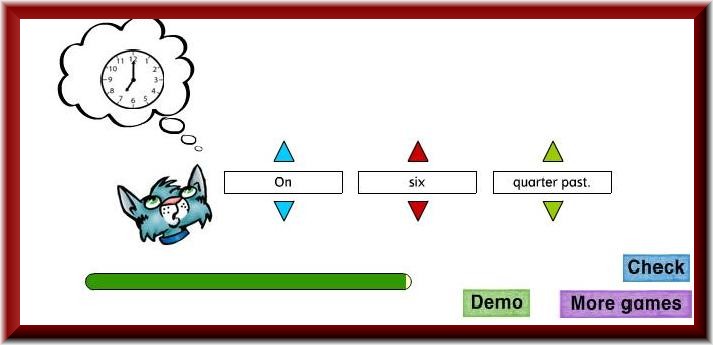
WHAT'S THE TIME?


Aquí podes practicar as horas e a decir o que fas en cada momento.


VOCABULARY
Escoita atentamente este video para saber decir a hora en inglés.


GAMES


STORIES
-Watch the video "Time for friends":


-"Hickory Dickory Mickey Mouse" video:


SONGS AND CHANTS
-"Honk around the clock" video


PLAYGROUND GAMES
-you can play this in the playground


How To Play 'What's The Time Mr Wolf'
FAMOUS CLOCKS
-Take a look inside the famous BIG BEN , in London