/* Sitemap plugin By MyBloggerLab */ #bp_toc { color: #666; margin: 0 auto; padding: 0; border: 1px solid #d2d2d2; float: left; width: 100%; } span.toc-note { display: none; } #bp_toc tr:nth-child(2n) { background: #f5f5f5; } td.toc-entry-col1 a { font-weight: bold; font-size: 14px; } .toc-header-col1, .toc-header-col2, .toc-header-col3 { background:#9E9E9E; } .toc-header-col1 { padding: 10px; width: 250px; } .toc-header-col2 { padding: 10px; width: 75px; } .toc-header-col3 { padding: 10px; width: 125px; } .toc-header-col1 a:link, .toc-header-col1 a:visited, .toc-header-col2 a:link, .toc-header-col2 a:visited, .toc-header-col3 a:link, .toc-header-col3 a:visited { font-size: 13px; text-decoration: none; color: #fff; font-weight: 700; letter-spacing: 0.5px; } .toc-header-col1 a:hover, .toc-header-col2 a:hover, .toc-header-col3 a:hover { text-decoration: none; } .toc-entry-col1, .toc-entry-col2, .toc-entry-col3 { padding: 5px; padding-left: 5px; font-size: 12px; } .toc-entry-col1 a, .toc-entry-col2 a, .toc-entry-col3 a { color: #666; font-size: 13px; text-decoration: none } .toc-entry-col1 a:hover, .toc-entry-col2 a:hover, .toc-entry-col3 a:hover { text-decoration:underline; } #bp_toc table { width: 100%; margin: 0 auto; counter-reset: rowNumber; } .toc-entry-col1 { counter-increment: rowNumber; } #bp_toc table tr td.toc-entry-col1:first-child::before { content: counter(rowNumber); min-width: 1em; min-height: 3em; float: left; border-right: 1px solid #fff; text-align: center; padding: 0px 11px 1px 6px; margin-right: 15px; } td.toc-entry-col2 { text-align: center; }
Showing posts with label Dietary Guidelines. Show all posts

Wednesday, 15 June 2016

Vitamin D for Athletes: Why Athletes Need It to Perform and How to Get Enough


It definitely feels like summer outside, and while the sun is out and shining, it's important to talk about a vitamin we actually get more of by spending time outside - Vitamin D!

Vitamin D comes in 2 forms: D2 (ergocalciferol) and D3 (cholecalciferol), and can be found in foods, supplements, and we get it from sun exposure.

Vitamin D is often known for its important role in bone development and maintenance and deficiency has serious health consequences for bone health. Rickets in children and osteomalacia in adults are the two bone-related diseases caused by severe vitamin D deficiency. Severe deficiency and rickets has become rare in children after milk starting getting fortified with Vitamin D in the 1930's.

Vitamin D plays other roles beyond bone health, though - it has functions in gene expression, muscular function, immunity, wound healing, and cardiovascular health. 

Most people are getting enough Vitamin D to prevent severe deficiency and bone health issues, but modest deficiency is common, and some people who are more likely to have a vitamin D deficiency include:
  • People who spend a lot of time indoors during the day
  • People who cover their skin or wear sunscreen at all times when outside
  • People with darker skin
  • People who live in the northern states of the U.S. or Canada (fewer hours of sunlight, and further from the equator)
  • Older people
  • People who are obese

Very few foods are naturally high in vitamin D. 

On the last blog, we mentioned that vitamin D will be listed on the new Nutrition Facts Label in the future because people really aren't getting enough of it. Many foods, such as milk, orange juice, yogurt, and ready-to-eat cereals are actually fortified with vitamin D, meaning it is added during processing, but the foods that are naturally high in vitamin D are rare. 

Those naturally vitamin-D rich foods include fatty fish (salmon, mackeral, tuna), fish liver oils, egg yolks, beef liver, cheese, and some muschrooms.

For many people, sun exposure is their primary source of Vitamin D. 

Ultravoilet-B (UVB) radiation stimulates vitamin D3 to be produced in the epidermis of the skin, but factors such as season, time of day, cloud cover, smog, skin color and sunscreen use effect vitamin D synthesis from UV exposure. 

Some vitamin D researchers have recommended exposing face, arms, legs or back without sunscreen for 5-30 minutes during peak sunlight hours (between 10AM - 3PM) several times per week. This doesn't mean tanning or burning your skin, and less time outdoors is needed in the summer, and this goes against the the Skin Cancer Foundation, who cautions against this sun exposure in order to get Vitamin D - using sunscreen, covering up and limiting sun exposure and UV radiation from tanning beds is important for preventing skin cancer. 

At the end of the day, you can always get Vitamin D through vitamin D-fortified foods and vitamins. 

A blood test for serum concentration of 25(OH)D is the best indicator of vitamin D status, and the Institute of Medicine claims that:
  • People are at risk for deficiency if serum 25(OH)D levels are <30 li="" ml="" ng="" nmol="">
  • Levels ≥50 nmol/L (≥20 ng/mL) are suffient for good bone healthy for almost all individuals

Vitamin D for Athletes

It is estimated that about 1 billion people of all ages are vitamin D insufficient or deficient, and athletes aren't immune to vitamin D deficiency. Studies examining vitamin D status in NFL players have shown that a significant number of players had deficient or insufficient vitamin D levels (especially amongst African American football players), making vitamin D intake a focus for many teams.

Many collegiate and professional sports teams are supplementing their athletes with vitamin D, and providing foods such as fortified cereals to their diets to prevent Vitamin D insuffiency.

We know that  vitamin D plays a role in muscle and cardiovasular function, helps keep bones healthy and strong,  and helps keep immune systems working effectively, so if making an effort to keep vitamin D levels high can keep athletes healthy, it might be worth looking into.


Tuesday, 15 March 2016

Why the Color Green Belongs on Your Plate All Year Long

St. Patrick's Day is this week, and every store and restaurant is having deals on the traditional Irish corned beef and cabbage...and also on green-dyed food and drinks. A lot of people probably feel the pull to buy those festive foods because it feels as if we can ONLY get that green-tinted cookie/cake/donut/beverage/milkshake ONE day a year. But, let's be honest...those foods appear on the shelves weeks (or even months!) before the actual holiday, and we end up indulging in more than one-day's worth of green treats.

Maybe those desserts don't appeal to you...but if you can't remember the last time you ate something green (we're talking vegetables, not desserts), then we're here to help you understand why the color green deserves to be on your plate all year long.

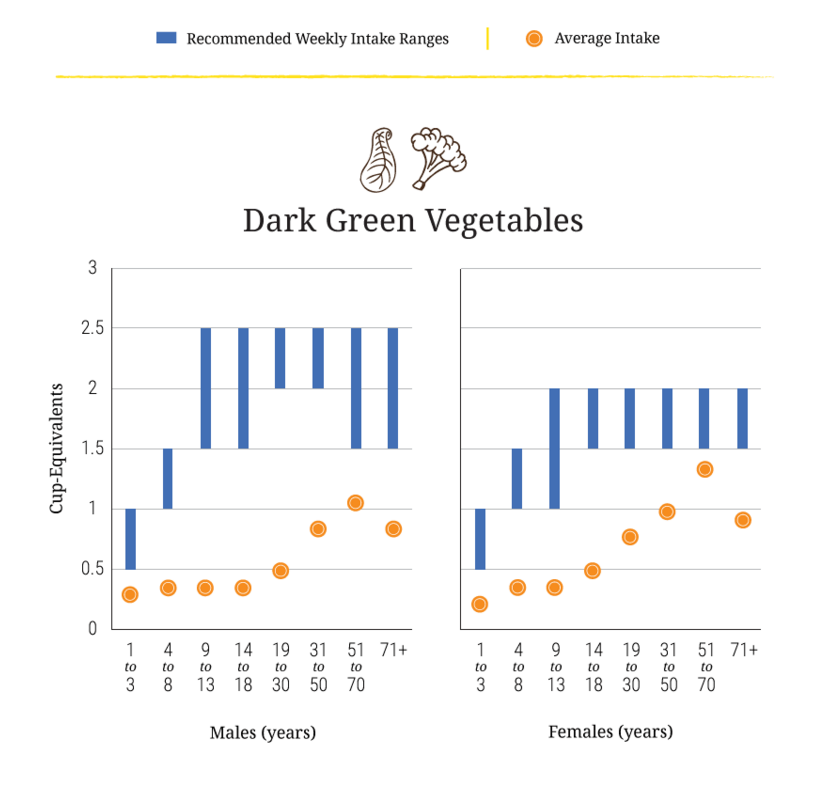
"Eat more greens" is one of the most common recommendations we make to athletes - green vegetables pack a powerful nutrient punch, boasting phytochemicals, fiber, calcium, iron,  and other vitamins and minerals, and they also have very little calories. The Dietary Guidelines for Americans for 2015-2020 were recently published and highlighted the fact that the majority of Americans aren't eating enough vegetables, including dark green vegetables. That means the majority of Americans (including athletes) are also missing out on all those awesome health benefits that green vegetables provide.
Recommended amounts of dark green vegetables. 1 cup-equivalent = 1 cup raw, cooked, or vegetable juice, or 2 cups of leafy greens! The average weekly intake is under one cup for many, especially kids and adolescents under 18. 
When athletes ask, "How many vegetables do I need?", the answer is usually, "As many as possible, the more variety, the better." 

The "MyPlate" recommendations encourage people to fill up 1/2 their plate with vegetables and fruit (mostly vegetables), or about 3-5 servings of vegetables per day, coming from the dark-green, red-orange, legumes and beans, starchy vegetables (potatoes, corn and peas), and other vegetables.

For 19-30 year old males, the Dietary Guidelines are recommending 2-2.5 cup equivalents of dark-green vegetables per week, which equates to eating a couple salads, greens on your sandwiches, green smoothies, or cooked broccoli with dinner each week. Of course, there are other colored vegetables to include in your diet, but if you really break down the recommendations to eating a serving per meal, or filling half your plate with vegetables, it becomes easy to eat enough of those foods. It doesn't mean eating salads every day -  green vegetables can be one of the easiest types of vegetables for people to incorporate into their diets. 


Green Recipes for St. Patrick's Day and Beyond

Shamrock Shake Green Smoothie from Brianne at Cupcakes and Kale Chips (It has Greek yogurt in it, so it would make the perfect post-workout treat, without eating 73 grams of sugar.)

You can add spinach to ANY berry smoothie (like this blueberry one!) to hide greens, which works great for kids and even adults who don't like vegetables.

Superfood Shamrock Smoothie or Vegan Cauliflower Colcannon from Kara at The Foodie Dietitian
Colcannon is a traditional Irish dish made from mashed potatoes with kale or cabbage. This healthified version looks awesome!

Nourish Bowls or Massaged Kale Salad, 3 Ways from McKel at Nutrition Stripped
Massaged kale sounds like a silly new trend, but massaging the kale really just means you add dressing to your kale (olive oil and lemon juice or vinegar, salt and pepper, etc.) and actually "massage" it into the leaves, which makes the kale leaves softer and easier to chew. You can use the massaged kale as a super nutritious base for any salad recipe!

Photo by Ryan, a Registered Dietitian who writes at i.run.on.nutrition
Collard Green Wraps from Ryan at I Run On Nutrition
You can substitute regular wheat wraps with collard green leaves. Try adding your regular sandwich fixings to the leaves!

14 Green Breakfasts from the Kitchn
Adding spinach/kale/collards to your eggs in the morning for extra nutrition

Tempeh and Broccoli Stir Fry from Dietitian Debbie Dishes
Tempeh is a great soybean protein that meat-lovers and vegetarians enjoy. It has a great texture and absorbs the flavor of whatever sauce and seasonings you're using - try subbing out your usual meat in stir fry and try this plant-based protein instead!

Picture by Brittany at Eating Bird Food
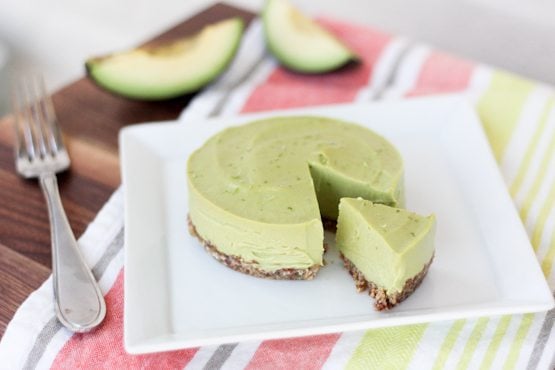
Okay, so maybe this recipe for Creamy Lime and Avocado Tarts from Brittany at Eating Bird Food DOESN'T contain any green vegetables, but it DOES contain super-healthy avocados and nuts, and it's green, so it deserves to get included in case you're looking for a St. Patrick's Day recipe.